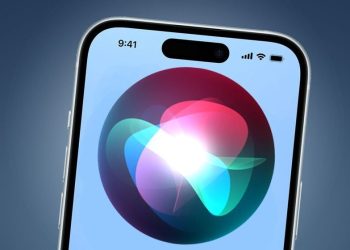
Apple has made a significant move in the world of artificial intelligence, acquiring Israeli startup Q.ai in a deal reportedly worth $2 billion, making it the company’s second-largest acquisition after the $3 billion Beats purchase in 2014. This acquisition signals Apple’s commitment to transforming how users interact with AI—without the need for speaking out loud.
What Q.ai Does: Revolutionizing AI Interaction
Q.ai specializes in silent speech technology, a cutting-edge concept that enables AI interaction through non-verbal methods. Instead of relying on audible voice input, Q.ai’s systems use optical sensors and machine learning to interpret subtle movements, such as:
- Facial muscle movements
- Lip motion
- Skin and jaw shifts
Through these systems, Q.ai translates these micro-movements into words or commands, allowing users to “speak” to an AI assistant through lip movements, without making a sound.
Why Q.ai’s Technology Matters for Siri
One of the biggest barriers to voice assistants like Siri has been the social context of using them aloud. Many users hesitate to speak to their devices in public places or shared spaces like offices or cafés. Q.ai’s technology could eliminate this issue by allowing users to silently interact with Siri or other AI features in discreet settings.
With this innovation, users might be able to:
- Whisper or mouth commands to Siri
- Interact with AI discreetly in public
- Get real-time assistance without pulling out their iPhone
This technology could dramatically expand how and when people use Apple Intelligence, making it available in settings where traditional voice commands are impractical.
Integration with Apple’s Wearables and Future Products
Q.ai’s technology is expected to integrate seamlessly with Apple’s existing hardware ecosystem. Initial reports suggest that Q.ai’s silent speech technology is designed to work with:
- AirPods with advanced sensors
- Apple smart glasses
- Vision Pro successors
- Always-on Siri experiences
This fits into Apple’s broader strategy, reminiscent of the company’s PrimeSense acquisition in 2013, which contributed to the development of Face ID technology. Q.ai’s technology could serve as the next step in creating a more ambient and hands-free AI experience, especially in wearables and headphones.
Apple’s Strategy: Rethinking AI Interaction
While competitors like ChatGPT and Gemini have taken the spotlight in the generative AI space, Apple’s acquisition of Q.ai signals a different approach. Instead of directly competing with text- or voice-based AI chatbots, Apple is focused on redefining the human-machine interface—making it quieter, more natural, and frictionless.
If successful, this silent speech technology could be a game-changer in ambient AI, offering a more private and natural method of interacting with technology. It could be a key building block for Apple in establishing a more seamless, AI-powered future.
Apple’s Official Statement
Apple has not disclosed the full terms of the Q.ai acquisition, but hardware chief Johnny Srouji praised the company’s technology, calling it “a remarkable company pioneering new ways to use imaging and machine learning.” The founders of Q.ai will join Apple, and their technology is expected to be integrated into future Siri and Apple Intelligence updates.
The Bigger Picture: AI Everywhere
This move by Apple suggests a focus on owning the interface of AI rather than competing head-to-head with generative AI models. With the future of computing likely to be dominated by AI, Q.ai’s silent speech technology could become one of the most important assets Apple has acquired in recent years, shaping the way humans interact with machines for years to come.
Read Also
The Best iPads to Buy in 2026: Performance, Value, and Portability