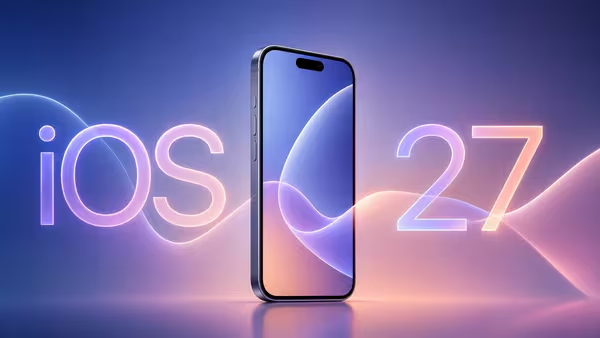
Apple could soon give iPhone users more freedom over how artificial intelligence works on their devices, according to new reports surrounding iOS 27.
The upcoming iOS 27 AI system is expected to introduce a feature that allows users to choose which third-party AI model powers specific Apple Intelligence tools. The move could mark a major shift in how artificial intelligence operates across smartphones and personal devices.
iOS 27 AI May Offer Personalized Model Selection
Most modern smartphones already include built-in AI systems, but users rarely get to decide which models handle their requests.
Android manufacturers such as Samsung and OnePlus heavily rely on Google’s Gemini integration, while Microsoft pushes Copilot across Windows devices. Apple now appears ready to take a different approach by allowing users to select the AI tools they prefer.
According to reports from Bloomberg’s Mark Gurman, Apple is developing an internal feature known as “Extensions.” The system would reportedly let users assign specific AI models to different Apple Intelligence functions.
That means one AI assistant could handle writing tasks while another manages image generation or research queries.
Siri Could Gain Multi-Model Support
One of the biggest changes tied to the iOS 27 AI upgrade could involve Siri.
Reports suggest users may eventually choose which AI model powers Siri responses behind the scenes. Instead of relying solely on Apple’s own systems, Siri could potentially connect to external AI providers based on user preference.
The approach would create a more flexible ecosystem where users select tools that best match their daily needs and workflows.
For example, some users may prefer Claude for writing support, while others may choose Gemini for image generation or ChatGPT for coding assistance.
Apple Intelligence Could Become More Flexible
The reported changes would also reduce the need for constantly switching between separate AI apps.
Instead of copying prompts and responses across multiple platforms, users could assign preferred AI models directly within Apple Intelligence settings. Once configured, those selections would automatically apply whenever the feature is used.
Industry analysts say this type of system-level integration could improve productivity and make AI interactions more seamless across Apple devices.
The strategy also reflects growing competition among major technology companies racing to dominate the consumer AI market.
iOS 27 AI Could Reshape Mobile AI Competition
If Apple introduces customizable AI selection at the operating system level, it could pressure rivals to offer similar flexibility.
Current smartphone ecosystems largely lock users into preselected AI assistants tied to broader corporate partnerships.
Allowing users to choose their own AI providers may create a more open environment while encouraging stronger competition between companies such as OpenAI, Google, Anthropic, and Microsoft.
Apple has not officially confirmed the reported iOS 27 AI features, but speculation around the next generation of Apple Intelligence continues to build ahead of the software’s expected unveiling.